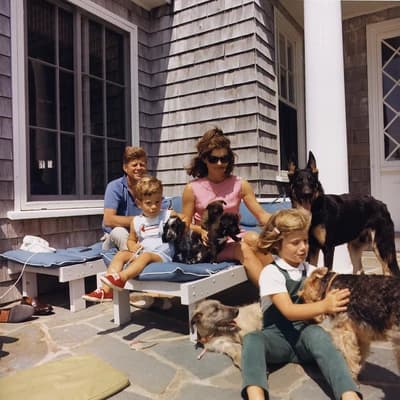
No American dynasty has endured more public grief than the Kennedys. Across four generations and more than eight decades, the family that came to symbolize postwar American ambition has buried two assassinated brothers, lost children to plane crashes, drownings, overdoses, and skiing accidents, and watched a sister reduced to permanent incapacity by a botched lobotomy — all under the unblinking eye of global media. The term "Kennedy Curse" has become shorthand for this pattern of loss, invoked again as recently as December 30, 2025, when Tatiana Schlossberg, JFK's 35-year-old granddaughter, died of acute myeloid leukemia just five weeks after publicly revealing her diagnosis. Whether one interprets the family's suffering as supernatural fate, statistical inevitability in a large and risk-embracing clan, or the consequence of a culture that prizes daring over caution, the sheer accumulation of Kennedy tragedies remains without parallel in American public life.
Where a senator's guilty conscience coined a phrase
The concept of a Kennedy "curse" crystallized around a single sentence spoken under extraordinary pressure. On July 25, 1969, one week after driving off a bridge on Chappaquiddick Island and leaving 28-year-old Mary Jo Kopechne to drown, Senator Ted Kennedy addressed the nation on live television. Among his attempts to explain his failure to report the accident for nearly ten hours, he said: "All kinds of scrambled thoughts went through my mind… including such questions as whether some awful curse did actually hang over all the Kennedys."
It was the first time a Kennedy had publicly framed the family's losses as a unified pattern rather than discrete misfortunes. Author J. Randy Taraborrelli, who chronicled the family in The Kennedy Heirs (2019), noted that "after that, the Kennedy curse became this sort of wide-ranging explanation for a lot of things that were happening." Historian Thomas Maier called the invocation "a misguided attempt to exculpate himself" — shifting blame from a man who drove drunk at night to some cosmic force beyond anyone's control.
The ground had been prepared before 1969. After Ted's near-fatal 1964 plane crash, his wife Joan told Jackie Kennedy: "It's a curse. Look at the things that have happened." A UPI dispatch the day after JFK's assassination carried the headline "Tragedy haunts Kennedy family." But it was Ted's televised plea that fused disparate griefs into a single narrative — one the media would invoke at every subsequent Kennedy misfortune for the next half-century and beyond.
A chronological reckoning from 1941 to 2025
The catalog of Kennedy tragedies spans from the early years of World War II to the present day, touching every branch of the family tree. What follows is an accounting of each major event, verified against historical records and contemporaneous news reports.
Rosemary Kennedy's lobotomy
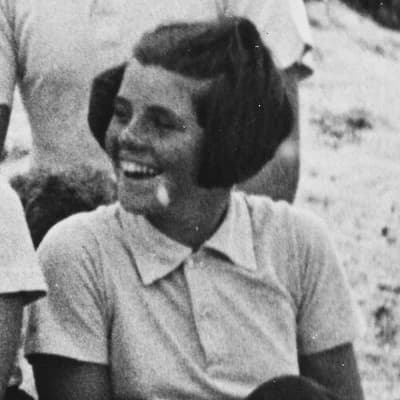
Rosemary Kennedy, born September 13, 1918, had exhibited developmental delays from childhood. By her early twenties she experienced mood swings and occasional outbursts. Her father Joseph P. Kennedy Sr. feared her behavior could jeopardize his sons' political futures. Without informing his wife Rose, he arranged a prefrontal lobotomy at George Washington University Hospital. The procedure — performed while Rosemary was awake — left her unable to walk unassisted or speak intelligibly. She was institutionalized at St. Coletta in Jefferson, Wisconsin, where she lived for over 60 years. Her father never visited. The lobotomy remained hidden until 1987. Rosemary died on January 7, 2005, at age 86.
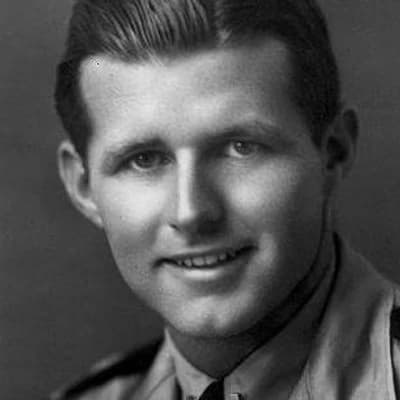
Joseph P. Kennedy Jr.
The eldest Kennedy son, born July 25, 1915, had been groomed for the presidency. Joe Jr. volunteered for Operation Aphrodite, a top-secret program converting war-weary bombers into remote-controlled flying bombs. On August 12, he and co-pilot Lt. Wilford John Willy took off from RAF Fersfield loaded with 21,170 pounds of Torpex explosive. After arming the payload, the aircraft detonated prematurely over Blythburgh, Suffolk. He was 29 years old. His death redirected his father's political ambitions onto the next son: John.
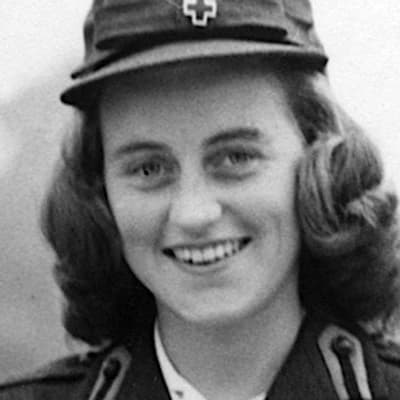
Kathleen "Kick" Kennedy
The fourth Kennedy child, born February 20, 1920, had already lost her husband to a German sniper in Belgium in 1944. Kathleen fell in love with Peter Wentworth-Fitzwilliam, a married earl, over her mother's fierce objections. While flying from Paris to the French Riviera, their chartered plane encountered violent thunderstorms near Saint-Bauzile, France, and crashed. All four aboard died. Kathleen was 28. Her father was the only Kennedy to attend her funeral; she was buried in the Cavendish family plot in Edensor, England.
Patrick Bouvier Kennedy
President Kennedy and Jacqueline Kennedy's third child was born five and a half weeks premature at Otis Air Force Base Hospital, weighing 4 pounds, 10½ ounces. Patrick developed hyaline membrane disease almost immediately and died 39 hours after birth on August 9, 1963. His death drew national attention to neonatal medicine and accelerated research into lung surfactant therapy that would eventually save countless premature infants.
John F. Kennedy
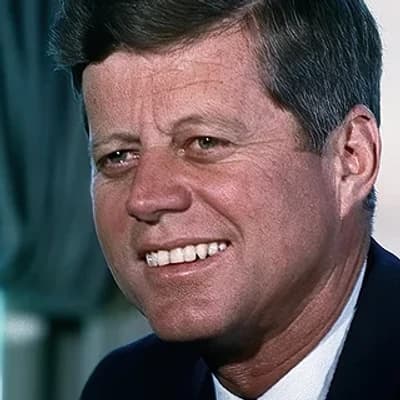
The 35th president, born May 29, 1917, was riding in an open-top motorcade through Dealey Plaza in Dallas at 12:30 p.m. CST when shots struck him in the neck and head. JFK was pronounced dead at Parkland Memorial Hospital at 1:00 p.m. He was 46 years old. Lee Harvey Oswald was arrested and charged; two days later, Oswald was shot dead on live television by Jack Ruby. The Warren Commission concluded Oswald acted alone.
Robert F. Kennedy
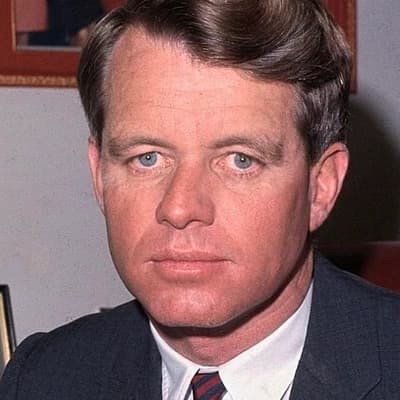
JFK's younger brother, born November 20, 1925, had just won the California Democratic presidential primary when he was shot in the kitchen pantry of the Ambassador Hotel in Los Angeles. RFK was struck three times by Sirhan Bishara Sirhan, the fatal wound behind his right ear. He died approximately 25 hours later on June 6. He was 42 years old. At the time, presidential candidates did not receive Secret Service protection.
David Kennedy
RFK's fourth child, born June 15, 1955, was found dead at age 28 on the floor of Room 107 at the Brazilian Court Hotel in Palm Beach, Florida. The cause was a combined overdose of cocaine, Demerol, and Mellaril. David had struggled with addiction since adolescence, a descent widely attributed to the trauma of watching his father's assassination on live television at age 12.
Michael Kennedy
RFK's sixth child, born February 27, 1958, died at 39 in a skiing accident on Aspen Mountain on New Year's Eve. The Kennedy family had been playing their customary game of football on skis — an activity that Aspen ski patrol had repeatedly warned them against. Michael collided head-first with a tree while turning to catch a pass. He was not wearing a helmet.
John F. Kennedy Jr.
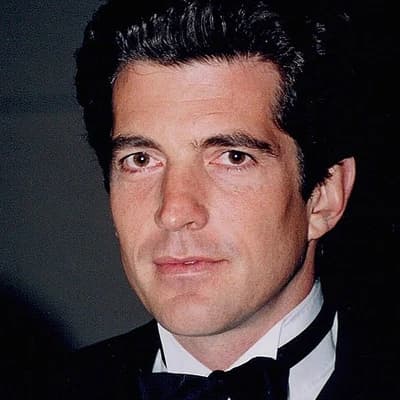
JFK's only surviving son, born November 25, 1960, was piloting a Piper Saratoga II HP from New Jersey to Martha's Vineyard with his wife Carolyn Bessette-Kennedy, 33, and her sister Lauren Bessette, 34. JFK Jr., then 38, held a private pilot's license but lacked an instrument rating. Flying over water at night in hazy conditions, he became spatially disoriented. The plane plummeted from 2,200 feet and crashed into the Atlantic 7.5 miles southwest of Martha's Vineyard. Navy divers recovered all three bodies four days later. A flight instructor had offered to accompany him that evening; Kennedy declined.
Kara Kennedy
Ted Kennedy's eldest child and only daughter, born February 27, 1960, suffered a fatal heart attack at age 51 after her daily swim at a Washington, D.C., health club. Kara had been diagnosed with lung cancer in 2002 and survived after aggressive treatment including partial removal of her right lung. Her cancer treatment had "taken quite a toll on her and weakened her physically" and "her heart gave out," her brother Patrick later said.
Mary Richardson Kennedy
The estranged second wife of Robert F. Kennedy Jr. was found dead at age 52 at her home in Bedford, New York, having died by suicide by hanging. Mary Richardson Kennedy had struggled with depression and substance abuse through the couple's contentious divorce proceedings, which were still pending.
Christopher Kennedy Lawford
The son of Patricia Kennedy and actor Peter Lawford, born March 29, 1955, died of a heart attack at age 63 while at a yoga studio in Vancouver, British Columbia. Christopher Kennedy Lawford had battled drug addiction for 17 years before achieving sobriety at 30, partly prompted by the overdose death of his cousin and close friend David Kennedy. He spent his final decades as a prominent addiction recovery advocate and UN Goodwill Ambassador.
Saoirse Kennedy Hill
The granddaughter of RFK, born May 22, 1997, was found unresponsive at the Kennedy compound in Hyannis Port. Saoirse was pronounced dead at Cape Cod Hospital at age 22. The cause was an accidental overdose of methadone, diazepam, and other substances combined with alcohol. A rising senior at Boston College, she had written candidly about her struggles with depression and a prior suicide attempt in a 2016 school newspaper essay.
Maeve Kennedy McKean and Gideon McKean
Maeve Kennedy McKean, 40, and her son Gideon, 8, were paddling a canoe to retrieve a kickball near their waterfront home in Shady Side, Maryland, during COVID-19 quarantine. Strong winds swept them into the open Chesapeake Bay. Neither wore a life jacket. The water temperature was approximately 51°F. Both bodies were recovered days later in 25 feet of water approximately 2.5 miles from shore.
Tatiana Schlossberg
Tatiana Schlossberg — Caroline Kennedy's daughter and JFK's granddaughter — was diagnosed with acute myeloid leukemia on May 25, 2024, the same day she gave birth to her second child. Over 19 months she endured multiple rounds of chemotherapy, two bone marrow transplants, and two clinical trials. On November 22, 2025, the 62nd anniversary of her grandfather's assassination, she published a searing essay in The New Yorker criticizing her cousin RFK Jr.'s cuts to NIH funding as HHS Secretary. She died five weeks later at age 35.
Two additional deaths, though from natural causes at advanced ages, punctuated this period: Ethel Kennedy, RFK's widow and the family matriarch, died on October 10, 2024, at age 96. Joan Bennett Kennedy, Ted Kennedy's first wife, died on October 8, 2025, at age 89 in Boston.
Curse, coincidence, or consequence of daring
Three broad frameworks compete to explain the Kennedy pattern, and the evidence suggests elements of all three at work — though the supernatural explanation is the weakest.
The rabbi's curse. The most persistent folk explanation holds that a rabbi cursed Joseph P. Kennedy Sr. for refusing to use his influence as U.S. Ambassador to help obtain entry certificates for European Jews fleeing the Holocaust. Kennedy's documented anti-Semitic views lend the story narrative plausibility, but no contemporary primary source documents any such encounter. Jewish historians characterize all versions as urban legend, and chronological problems undermine the most popular version.
The statistical case for normalcy. Joseph and Rose Kennedy had nine children. Robert and Ethel Kennedy alone had eleven. The extended family now spans four generations and exceeds 100 direct descendants. Skeptics argue that in any clan of this size — especially one whose members pilot small aircraft, ski aggressively, use recreational drugs, and hold public office in an era of political assassination — a significant number of premature deaths is probabilistically unremarkable.
Yet the statistical defense has limits. Of Joseph and Rose's original nine children, four died violent or unnatural deaths and a fifth was permanently incapacitated — a rate that strains even the most generous probabilistic model. Two brothers assassinated within five years. Three family members killed in private plane crashes across three generations. The clustering of tragedy at the very top of the family tree is harder to explain away.
The behavioral explanation. The most analytically rigorous framework points to the family culture Joseph P. Kennedy Sr. cultivated: intense physical competition, an ethos of daring that often crossed into recklessness, and a conviction that Kennedys operated by different rules. The evidence is extensive: Joe Jr. volunteered for a near-suicidal bombing mission when he had earned the right to go home. Michael Kennedy played football on skis despite explicit warnings from ski patrol. JFK Jr. piloted a plane at night over water without an instrument rating after declining a flight instructor's offer to accompany him. Ted Kennedy drove drunk off a bridge and then tried to manage the political fallout rather than calling for help.
Substance abuse compounds the pattern. David Kennedy, RFK Jr., Patrick Kennedy, Ted Kennedy, and Saoirse Kennedy Hill all struggled with addiction — a through-line that Patrick Kennedy has attributed to intergenerational trauma and a family culture of suppressing grief. "My father went on in silent desperation for much of his life," Patrick wrote in his 2015 memoir A Common Struggle, "self-medicating and unwittingly passing his unprocessed trauma on to my sister, brother and me."
How the Kennedys turned grief into a governing philosophy
The family's most powerful rebuttal to the curse narrative has never been rhetorical — it has been legislative and institutional. Virtually every major Kennedy tragedy has produced a corresponding act of public service.
Rosemary's lobotomy transformed disability policy. Her sister Eunice Kennedy Shriver took over the Joseph P. Kennedy Jr. Foundation and redirected its mission toward intellectual disability research. In 1962 she published a groundbreaking essay publicly revealing Rosemary's condition — shattering a family secret and a broader cultural silence. She was instrumental in creating the National Institute of Child Health and Human Development at the NIH. In July 1968, she launched the first International Special Olympics Games in Chicago with 1,000 athletes. Today, Special Olympics serves more than 6 million athletes across 200 countries.
The assassinations reshaped gun law. After RFK's murder in June 1968, former Kennedy campaign volunteers staffed the Emergency Committee for Gun Control. On October 22, 1968, President Johnson signed the Gun Control Act of 1968, banning interstate shipment of firearms to individuals and restricting sales to felons, minors, and those with mental illness. The Department of Justice calls it "the primary vehicle for the federal regulation of firearms" to this day.
Patrick Kennedy's addiction became mental health legislation. Ted Kennedy's youngest son struggled with bipolar disorder and substance abuse from his teens. He channeled that pain into the Mental Health Parity and Addiction Equity Act of 2008, which he co-authored with his father and Republican Senator Pete Domenici. The law requires insurers to cover mental health and substance use disorders on equal terms with medical conditions — what Patrick called "a medical civil rights bill."
Ted Kennedy's decades of healthcare advocacy. When Ted Kennedy's son lost his right leg to cancer at age 12, Kennedy spent months at Boston Children's Hospital meeting families who could not afford the treatments his government insurance covered. Over the following decades, he became the chief Senate sponsor of the Americans with Disabilities Act (1990), championed the Children's Health Insurance Program (1997), and laid the groundwork for the Affordable Care Act. He died of brain cancer on August 25, 2009 — seven months before the ACA was signed. His son Patrick placed a note on his Arlington grave: "Dad, the unfinished business is done."
The curse's latest and most bitter chapter
The years 2024–2026 brought new grief and an extraordinary intra-family conflict. On October 10, 2024, Ethel Kennedy — RFK's widow, the family matriarch, and founder of Robert F. Kennedy Human Rights — died at 96, just six weeks after her son RFK Jr. suspended his independent presidential campaign and endorsed Donald Trump.
RFK Jr.'s confirmation as Secretary of Health and Human Services in February 2025 opened a rift within the family that deepened tragically. His cousin Caroline Kennedy wrote to senators calling him "unqualified." Within months, he announced sweeping HHS restructuring, laying off approximately 20,000 employees and slashing billions in NIH research funding.
It was against this backdrop that Tatiana Schlossberg — Caroline's daughter — published her searing New Yorker essay on November 22, 2025, the anniversary of her grandfather's assassination. Diagnosed with acute myeloid leukemia the day she gave birth to her second child, she had spent 19 months fighting for her life through treatments at institutions whose funding her cousin was cutting. She noted that one of her chemotherapy drugs owed its existence to government-funded research: "the very thing that Bobby has already cut." She died five weeks later, on December 30, 2025. Hours after the family announced her death, then-President Trump posted social media attacks on the Kennedy family.
The real curse may be the one no family can escape
What distinguishes the Kennedy story is not that tragedy strikes — tragedy strikes every family — but the specific alchemy of scale, visibility, risk tolerance, and unprocessed grief that makes each loss feel like confirmation of a pattern. The family produced a president, two senators, a dozen public servants, and over a hundred descendants across four generations. They flew their own planes, skied without helmets, and competed at everything with an intensity their patriarch cultivated and their fame magnified. When members of such a family die young, the deaths are not quiet. They become national events, each one retroactively strengthening a narrative that was, at its origin, one guilty man's attempt to deflect blame for a woman's drowning.
Yet dismissing the curse entirely requires ignoring an extraordinary concentration of violent death among the original nine Kennedy siblings — four killed, one destroyed — that no statistical model comfortably explains. The honest answer is that the Kennedy experience sits in the uncomfortable space between explicable and inexplicable, where real behavioral patterns (recklessness, addiction, suppressed trauma) intersect with genuinely terrible luck and relentless public attention that transforms private grief into myth.
The family's most enduring response has not been to debate the curse's existence but to render the question secondary. Special Olympics, the ADA, mental health parity, the Affordable Care Act, gun control legislation — these are the legacies that outlast any narrative of doom. Patrick Kennedy captured it best: "My father taught me that even our most profound losses are survivable, and it is what we do with that loss, our ability to transform it into a positive event — that is one of my father's greatest lessons." The Kennedys have never escaped tragedy. What they have done, at their best, is refuse to let tragedy be the final word.